CM Cillian McArdle

Mechanical engineer, now building robots

Cillian McArdle

I spent four years learning how physical things fail, bend and carry load. Now I’m learning to make them think — with the aim of building robots that work inside medicine.

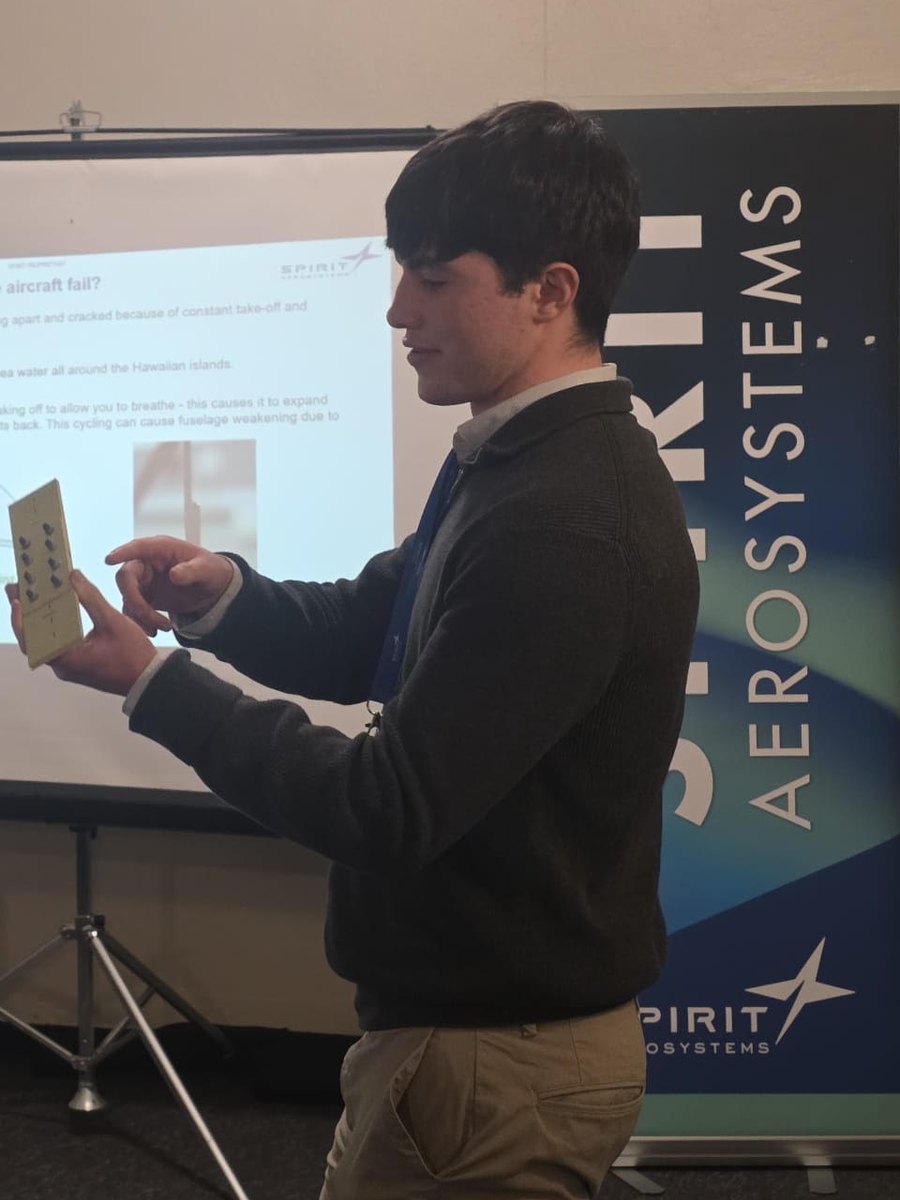
Cillian McArdle presenting to an audience, holding a riveted aluminium lap-joint specimen beside a projection screen.
Presenting at the QUB Chemistry at Work Event on Behalf of Short Brothers, a Boeing Company

About

I’m Cillian. A mechanical engineer that is delving into robotics.

I am excited by using software and electronics to apply my knowledge of the physical world for creating innovative technology.

Where I’m heading

To research and develop solutions in medical robotics.

It is the field where the mechanical and the computational carry equal consequence. My interests sit in perception and motion for devices that work on or near people.

Skills

Software & perception

  • Python
  • PyTorch
  • OpenCV
  • TensorFlow
  • Computer vision
  • MATLAB

Robotics

  • ROS 2
  • Robotic system design
  • Human pose estimation
  • Sensor validation
  • NI LabVIEW

Mechanical & materials

  • CAD — SolidWorks
  • Mechanical design
  • Materials science
  • Thermal engineering
  • Mechanical testing
  • Engineering drawings

Research & teamwork

  • Experimental design
  • Literature review
  • Technical reporting
  • Supplier liaison
  • Team leadership

Selected work

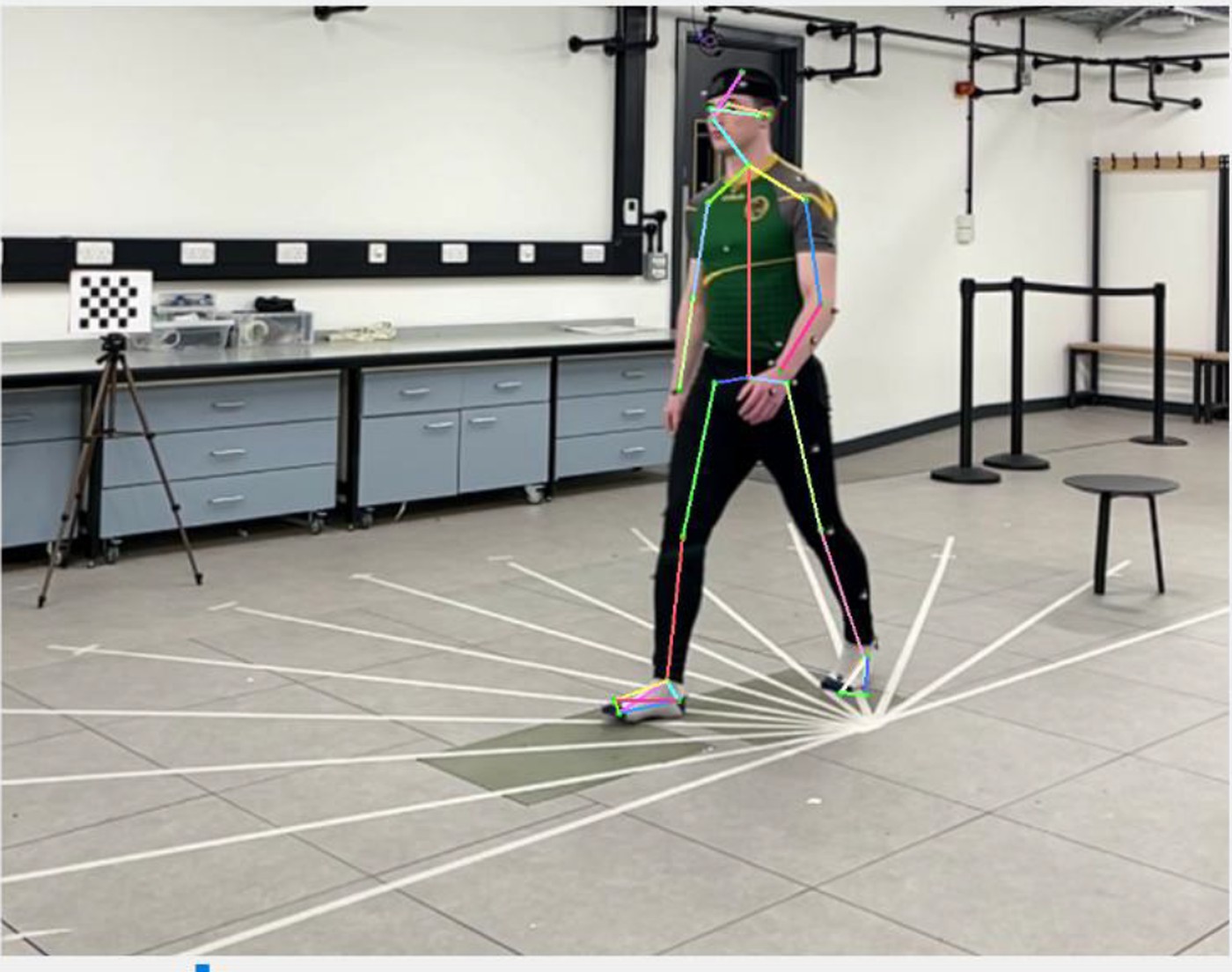
A pose-estimation skeleton drawn in bright green, magenta and cyan, overlaid on video of a person mid-stride in a motion capture laboratory, with a calibration checkerboard and floor markings visible behind them.
Example of PyQt-based visualisation tool used for validating human pose data

Undergraduate dissertation2024–25

Accuracy of 3D human pose estimation from varied viewing angles

This undergraduate dissertation project investigated how the viewpoint of single camera footage affects the accuracy of human motion tracking. The study compared accuracy of 2D and 3D human pose estimation (HPE) systems validated against a Vicon optical motion capture ground truth. To achieve this I developed software to visualize HPE data and compare it with the ground truth in order to calculate error metrics.
  • Python
  • PyTorch
  • OpenCV
  • Research
  • Experimental design
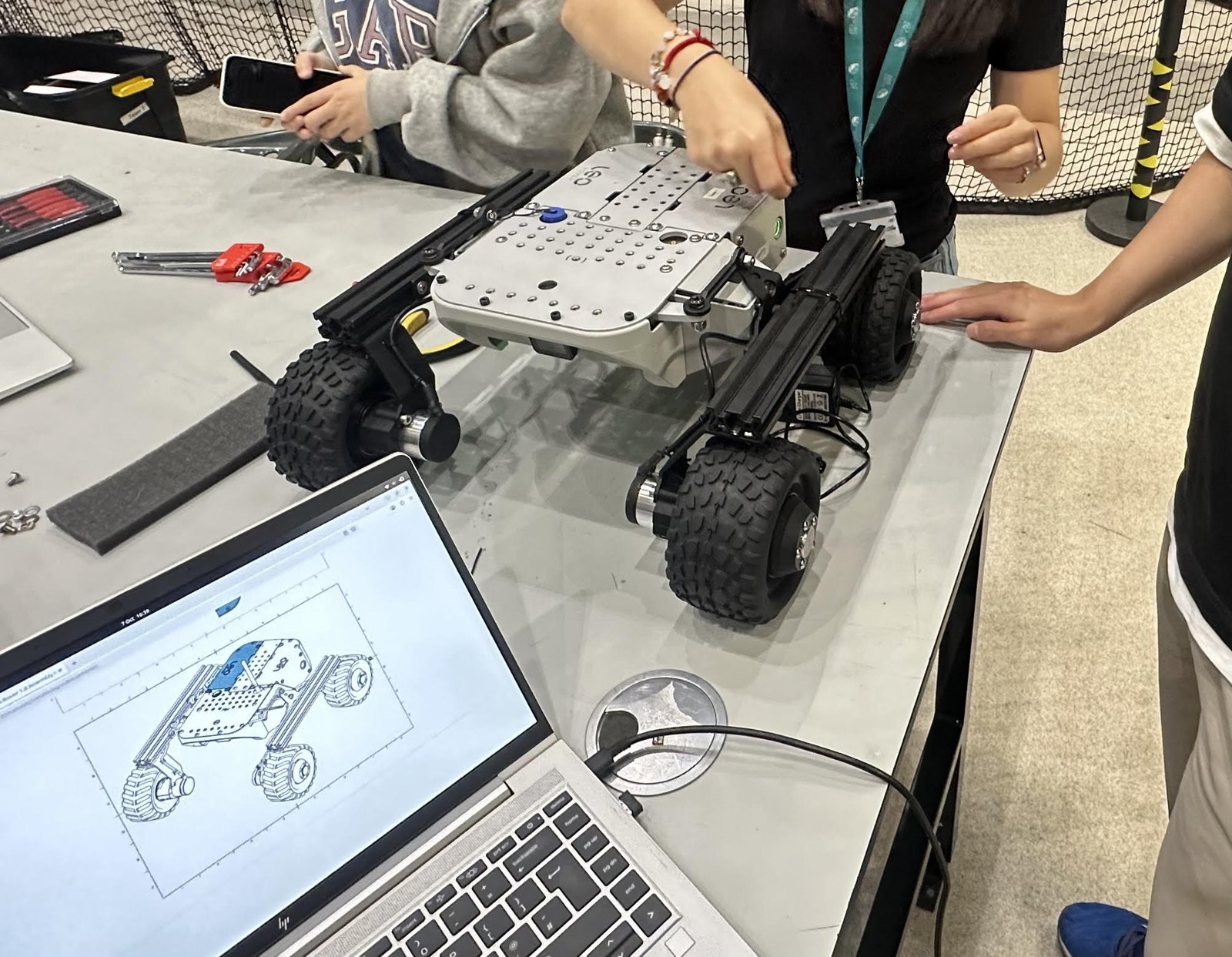
A four-wheeled Leo Rover robot on a workbench with its aluminium chassis plate and extruded arm rails fitted, while two team members work on it. A laptop in the foreground shows the matching CAD assembly drawing.
Assembling the Leo Rover Hardware

MSc group design project2026 — ongoing

Leo Rover Group Design Project

The goal of this ongoing project is to develop a robot which can autonomously search for, and retrieve, coloured objects from an environment and return them to the starting point, placing them in a matching coloured bin. This will encompass all facets of my MSc Robotics degree; software development, system hardware design, computer vision theory and more.

  • ROS2
  • Python
  • Computer vision
  • Robotic system design
  • CAD
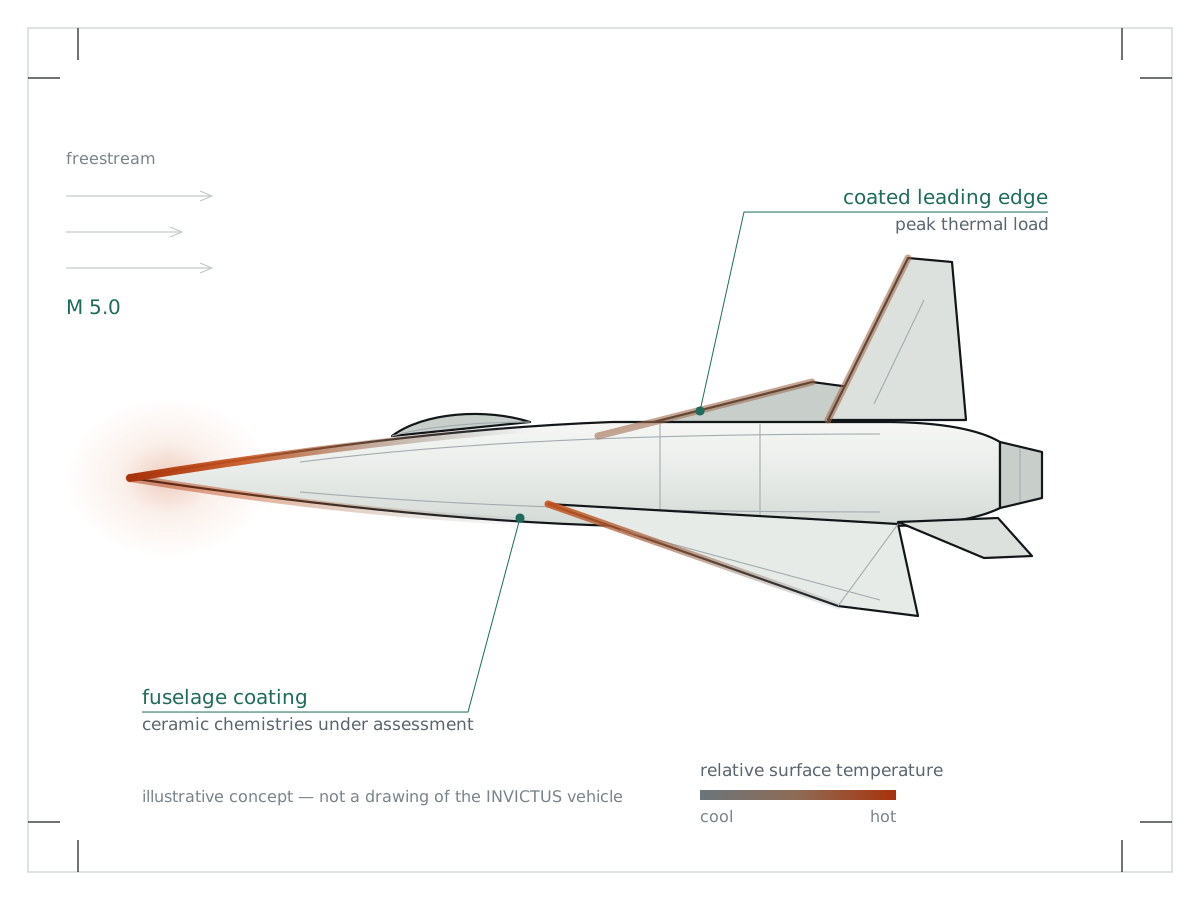
Technical line drawing of a slender swept-wing hypersonic aircraft concept, with the nose tip, wing leading edges and fin leading edge shaded from hot to cool to show where a thermal protective coating carries the greatest heat load.
Where the coating matters most: leading-edge heating on a Mach 5 airframe. Illustration, not a drawing of the INVICTUS vehicle.

Research, European Space Agency INVICTUS project2025–26

Research for Thermal Barrier Coatings

As part of the European Space Agency’s INVICTUS project, I conducted research into thermal protective coatings for the fuselage of a Mach 5-capable aircraft. Reviewed academic literature and liaised with suppliers to assess thermal and mechanical performance of ceramic coating chemistries. Further assessed thermal performance through building a Python-based finite volume model which calculated the thermal lag produced by coatings.

  • Python
  • Materials science
  • Research skills
  • Thermal engineering

Get in touch

I’m looking for research and graduate opportunities in medical robotics, and happy to talk about any of the work above.

Credits & attribution

Photographs. All three photographs on this page are my own or were taken of my own work, and are used with permission of those pictured. No third-party stock photography, video or illustration is used.

Drawings. The hypersonic airframe figure is an original illustration drawn in SVG for this page. It is indicative only and does not depict the INVICTUS vehicle.

Typefaces. Archivo by Omnibus-Type, Source Serif 4 by Frank Grießhammer for Adobe, and IBM Plex Mono by Mike Abbink & Bold Monday — all released under the SIL Open Font License 1.1 and self-hosted here. Full licence texts are included in fonts/licenses/.

Icons & graphics. None used. All rules, grids and annotation marks on this page are drawn in CSS.

Third-party marks. Spirit AeroSystems branding appears incidentally within a photograph of my own work and remains the property of its owner. Leo Rover is a product of Kell Ideas sp. z o.o.